

The Ramblers Digital Transformation

The Ramblers, the UK's leading walking charity, was undergoing a major rebrand and sought to transform its digital presence. My role was to lead the redesign and build of two critical products: a new public-facing website to drive donations and membership, and a new Walk Management System (WMS) to empower walking groups to organise and publish walks. The project came with a highly optimistic timeline and a very tight budget, requiring a strategic approach to balance scope, speed, and quality.
The Ramblers was facing a key business challenge: a need to grow its digital footprint to increase both donations and membership. While the charity had a loyal, traditional member base of older, retired individuals, they aimed to expand their reach to a younger demographic. This required a completely reimagined digital experience that could appeal to new users while still serving the needs of their existing community. The project was the central pillar of their rebrand, making its success crucial to the organisation's future.
My role was Experience and Project Director, with a unique combination of responsibilities that included both the User Experience and Product Management for the entire project. My goals were to lead the work from initial discovery through to go-live, and to launch both the public website and the Walk Management System on a very tight budget and within an ambitious timeline. In the longer term, the project's success would be measured by a tangible increase in donations and membership sign-ups.
To manage the complexity of two distinct products, we strategically split the project into two main workstreams. The first focused on the public website and its underlying CMS, addressing the primary business goals of attracting new users and increasing donations. Once that discovery phase was complete, we began work on the second stream: the Walk Management System. This approach allowed us to allocate team resources effectively and ensure key team members were not overloaded.
Our discovery for the public website was driven by a deep understanding of user and business needs. We conducted several rounds of user interviews across all user segments to create detailed personas that served as a shared source of truth for the project. We ran stakeholder workshops to align on goals and requirements. To design a new, optimized information architecture, we conducted surveys, tree-tests, and card sorts, which provided the data to build a new navigation structure that would drive conversion and meet the site's goals.
For the Walk Management System, we followed a similar process but leveraged our client’s internal stakeholders who regularly engaged with walking group leaders. This direct line to user needs helped us efficiently uncover their pain points and requirements for a new walk management tool.
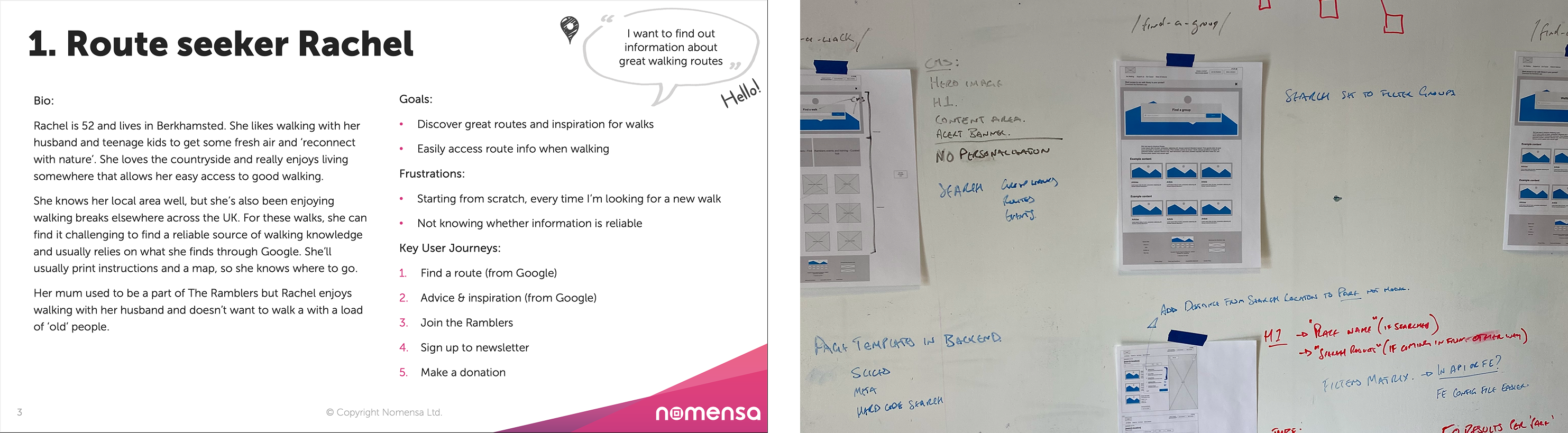
To navigate the tight deadlines and budget, we introduced the client to an Agile methodology. This allowed us to release features quickly and iterate based on feedback. We ensured the client was fully aligned with our approach and timelines before starting each new workstream, using milestones to monitor progress. When a feature or timeline slipped, we immediately re-prioritized the backlog and adapted the scope to ensure we could still meet our launch dates.
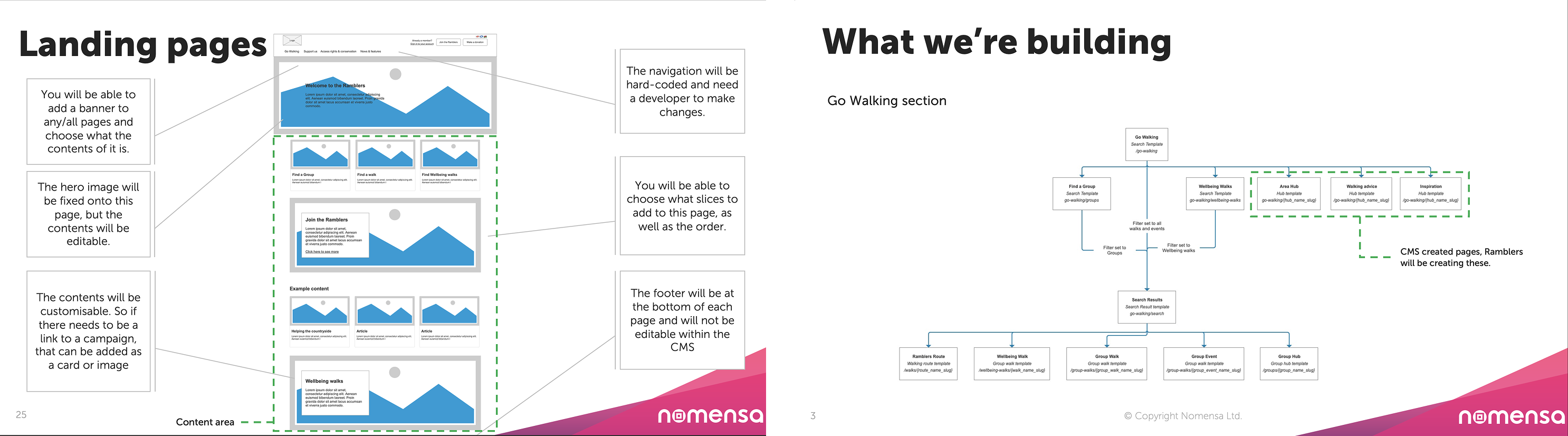
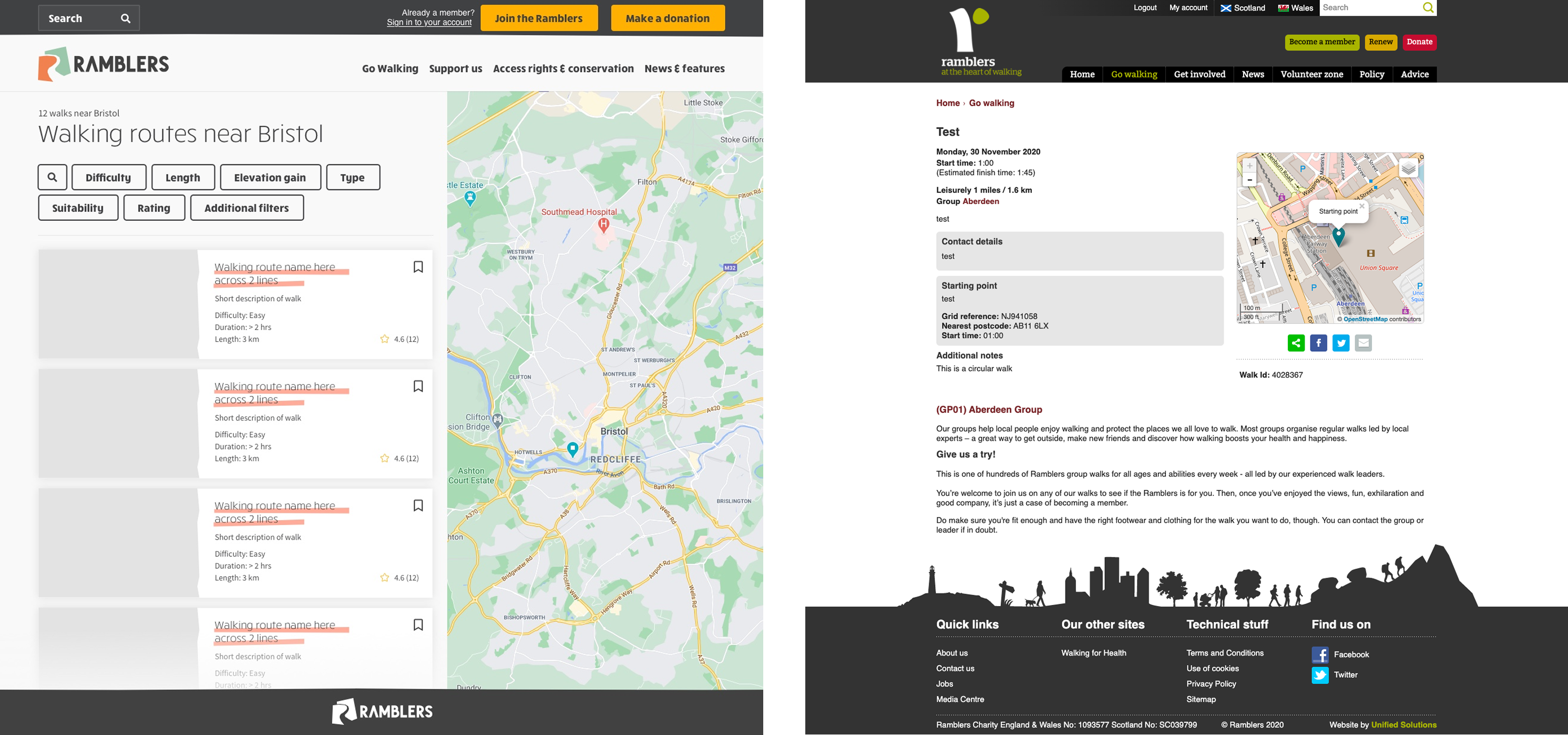
To maximize speed and efficiency, we built a design system as early as possible. By collaborating with the client's internal brand team, we established core principles and design foundations during the discovery phase, allowing us to deliver high-fidelity designs within the very first sprint. The main challenge was the compressed timeline, as we were designing and building within the same sprint. This often meant client sign-off or changes to the scope would impact the following sprint, requiring constant collaboration and adaptation. We targeted a younger audience through the strategic use of SEO and advertising, complemented by a new visual identity and brand imagery designed to be more dynamic and appealing.
As the Product Manager for both workstreams, I oversaw a full team for each, including engineers, front-end developers, UX designers, content writers, business analysts, and QA testers. On the client side, I maintained a consistent line of communication with the Product Owner, CFO, and Head of Digital Transformation through weekly meetings. The Product Owner also participated in our daily stand-ups to ensure a tight, shared understanding of progress and challenges.
The project was a resounding success. After a year of development, both the public website and the Walk Management System were launched on time and within the original budget.
